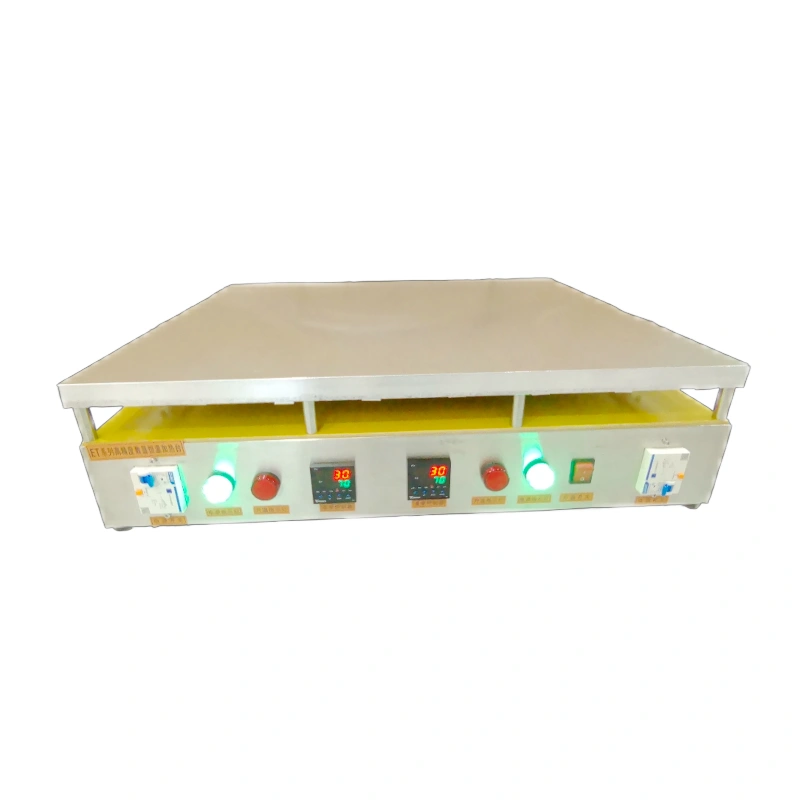

BGA Constant Temperature Heating Platform (Hot Plate) Complete User Manual
The BGA constant temperature heating platform, commonly known as the “Hot Plate”, is mainly used for BGA chip reballing, desoldering and tin dragging, and component soldering. It is also suitable for screen repair, LED welding, and constant temperature baking of laboratory samples. Equipped with PID intelligent temperature control, high-end models feature timing reminder, exhaust ventilation, and triple heat insulation protection.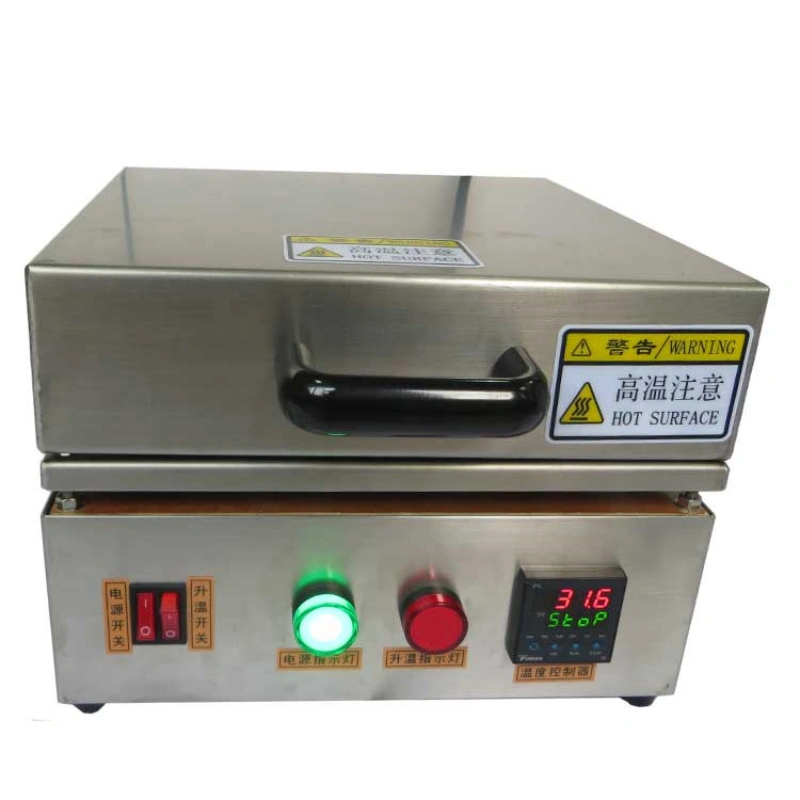
1. Standard Temperature Settings
- Standard temperature for BGA reballing/desoldering: 250°C for regular operations
- Adjustment principle: Lower to 220–240°C for heat-sensitive thin chips and small components; slightly increase to 260°C for thick substrates and large chips. Strictly prohibit long-term baking above 300°C at one time.
- Maximum temperature limit: The machine can be adjusted up to 400°C, but temperatures above 350°C are rarely used in daily operations.
2. Application Scenarios
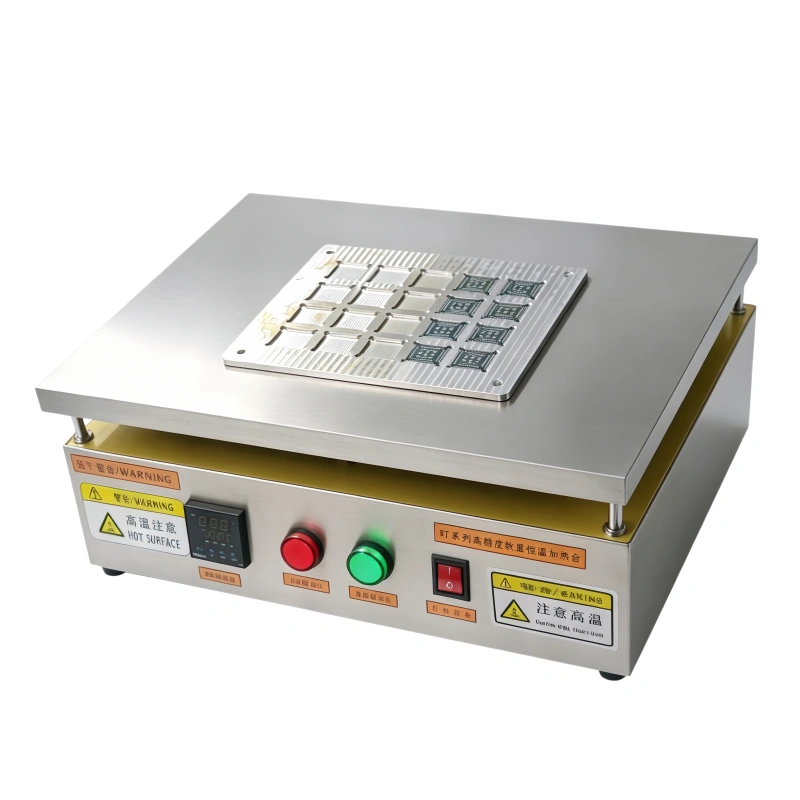
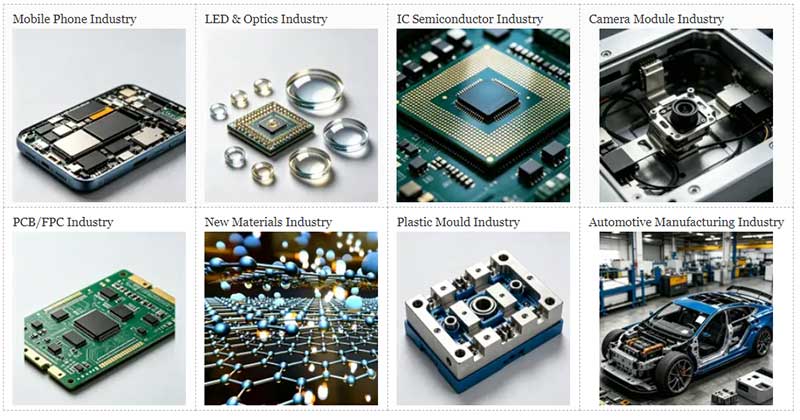
- Electronics Repair: BGA chip rework, PCB preheating, capacitor/resistor desoldering, mobile phone LCD screen separation
- Optoelectronics Industry: LED bead welding, aluminum substrate soldering, light bar hot pressing
- Laboratory Use: Sample drying, material constant temperature dissolution, heat resistance testing
- Small Thermal Processing: Adhesive film sealing, plastic part shaping
3. Complete Operation Procedures
3.1 Basic Startup Operation Process
- Power Connection: Plug into a grounded 220V three-hole socket with leakage protection. Ensure the cable is intact and firmly connected.
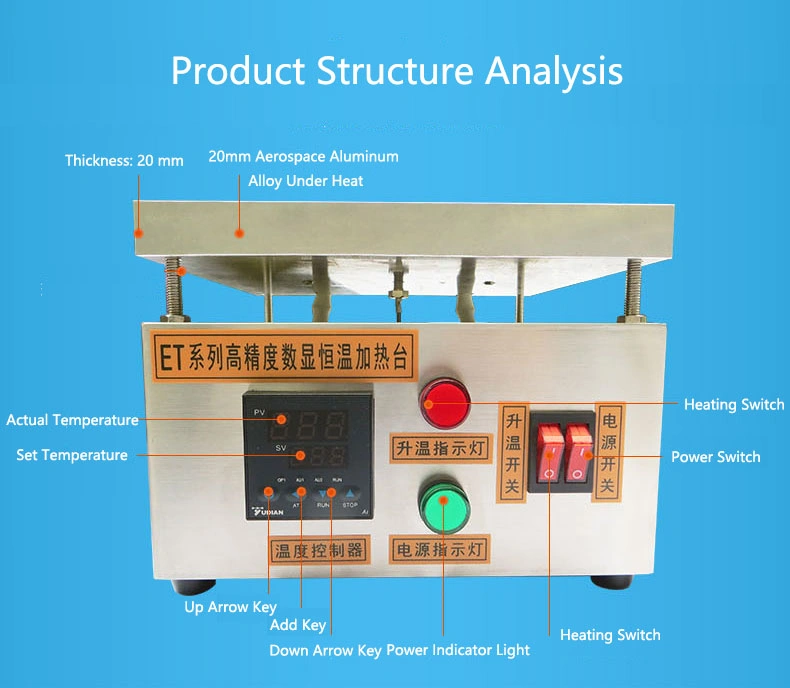
- Temperature Setting: Press the SET button briefly, use the up/down arrow keys to input the target temperature (e.g., 250°C), then press SET again to save.
- Start Heating: Turn on the Heating Switch on the panel. The red heating indicator will light up, and the aluminum platform will start heating. The green power indicator stays on when the machine is powered normally.
- Constant Temperature Operation: Wait until the PV (Process Value) stabilizes at the set value before placing the workpiece for soldering/desoldering.
- Shutdown and Finishing: First turn off the Heating Switch. Wait for the aluminum plate to cool down to below 50°C naturally, then turn off the main power switch.
3.2 Additional Operations for Timing Models
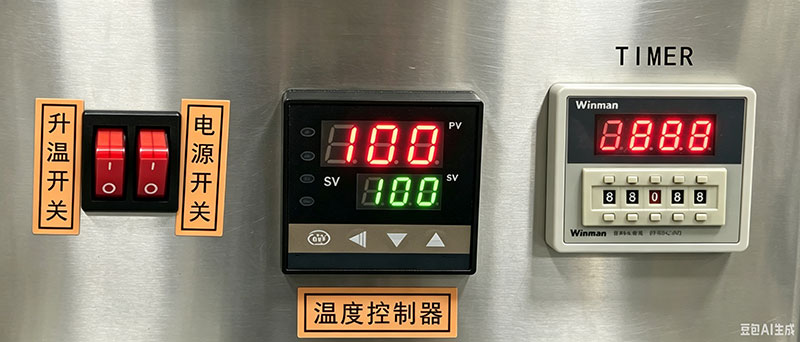
For models equipped with time relay:
- Adjust the digital dials and M (minute)/S (second) gears to set the operation countdown duration
- The alarm red light will turn on when the timing ends, and it can be wired to automatically cut off the heating output when the time is up
3.3 PID Auto-Tuning Function (Core of High-Precision Temperature Control)
Function: The device automatically matches the thermal conductivity of the heating tubes and aluminum plate, calculates the optimal P/I/D parameters, and reduces the temperature control error to within ±2°C.
- Press and hold the SET button for 5 seconds to enter the secondary setting menu, find the OUT1 option, and change the value to 01
- Press SET briefly again to exit the menu, the OUT1 indicator will flash, and the device will enter automatic tuning
- Keep the power on throughout the process and do not touch the platform workpiece. Wait for 3 temperature fluctuation cycles until the indicator light goes out, and the parameters will be automatically saved
- If there is large environmental vibration or voltage fluctuation, repeat the tuning 2–3 times. The parameters calibrated near the constant temperature point will have better effect
- You can enter the secondary menu to view and manually fine-tune the P/I/D values
4. Core Equipment Specifications (Standard ET Series Models)
| Item | Specification Parameter |
|---|---|
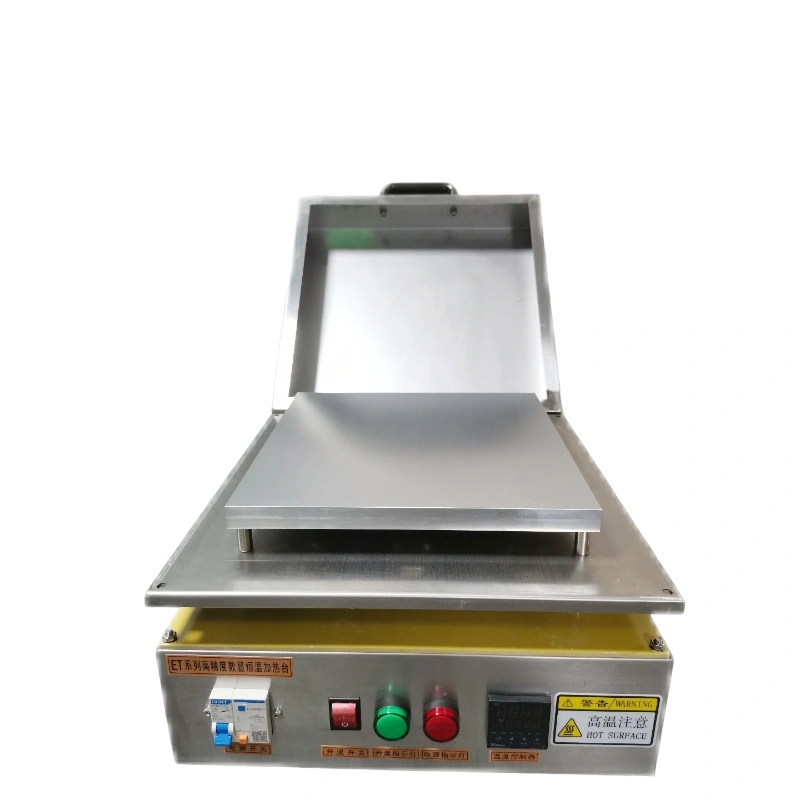
| Heating Aluminum Plate Size | 120mm × 200mm |
| Rated Power | 1200W |
| Temperature Control Range | Room temperature ~ 400°C (PID closed-loop control) |
| Temperature Sensor | K-type thermocouple |
| Input Voltage | AC 220V 50/60Hz |
| Overall Dimensions | 300mm × 300mm × 170mm (L×W×H) |
| Net Weight | 6kg |
| Core Hardware | Three high-power heating tubes, thickened heat insulation layer, optional exhaust ventilation, timing reminder module |
5. Safety Precautions
⚠️ Critical Safety Instructions
- Electrical Safety: Must be grounded and used with a leakage protection switch. Prohibit using ungrounded power strips and disassembling the chassis to modify internal wiring without authorization.
- High Temperature Protection: The aluminum plate can reach up to 400°C during operation. Never touch the heating platform with bare hands or arms. Use high-temperature tweezers and heat-insulating gloves to handle workpieces.
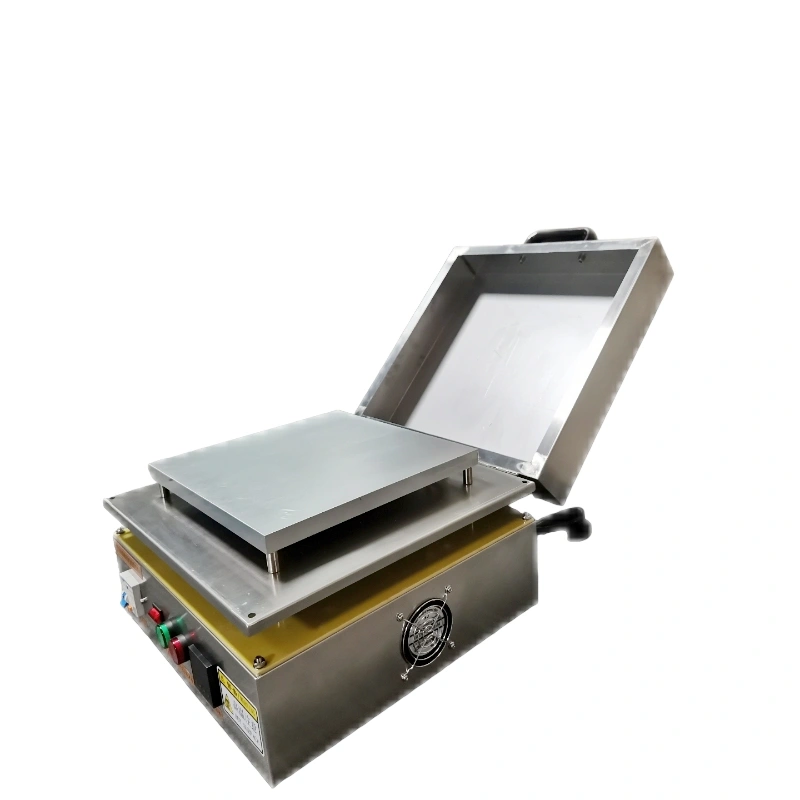
- Heat Dissipation Check: Check the rear ventilation vents of the machine before and after operation to ensure no tin slag or debris is blocked, preventing internal overheating and damage to the heating tubes.
- Environmental Requirements: Place on a flat and fireproof table with ≥10cm heat dissipation space around. Keep away from flammable foam, alcohol, and flux sprays.
- Maintenance: Wipe off tin slag and flux residues on the aluminum plate surface after cooling. Disconnect the power supply when not in use for a long time and store in a dry and dust-proof environment.
6. Equipment Advantages and Features
- Timing Reminder: Preset heating duration with sound and light alarm when overtime
- Strong Heat Insulation Structure: Multi-layer heat insulation cotton isolates the chassis from the high-temperature aluminum plate, keeping the outer shell cool to touch
- Dual Digital Display Instrument: Separate display of PV (real-time temperature) and SV (set temperature) for intuitive reading
- Upgraded Exhaust Configuration: Removes flux smoke and improves the operating environment
- Three-Tube Balanced Heating: Uniform plate temperature without local temperature difference, reducing false soldering in BGA reballing
- Safety Protection Layout: Independent heating/power dual switches, high/low temperature indicators, and over-temperature protection circuit