 あなたのウェブサイト名

What is ITO Transparent Conductive Film?
ITO Thin Film Heating Process & Methods
Overview of ITO Transparent Conductive Film
ITO stands for Indium Tin Oxide. ITO thin film is an n-type semiconductor material featuring high electrical conductivity, high visible light transmittance, strong mechanical hardness and stable chemical properties. It is widely adopted as transparent electrode material for LCD, PDP, EL/OLED electroluminescent displays, touch panels, solar cells and other electronic instruments.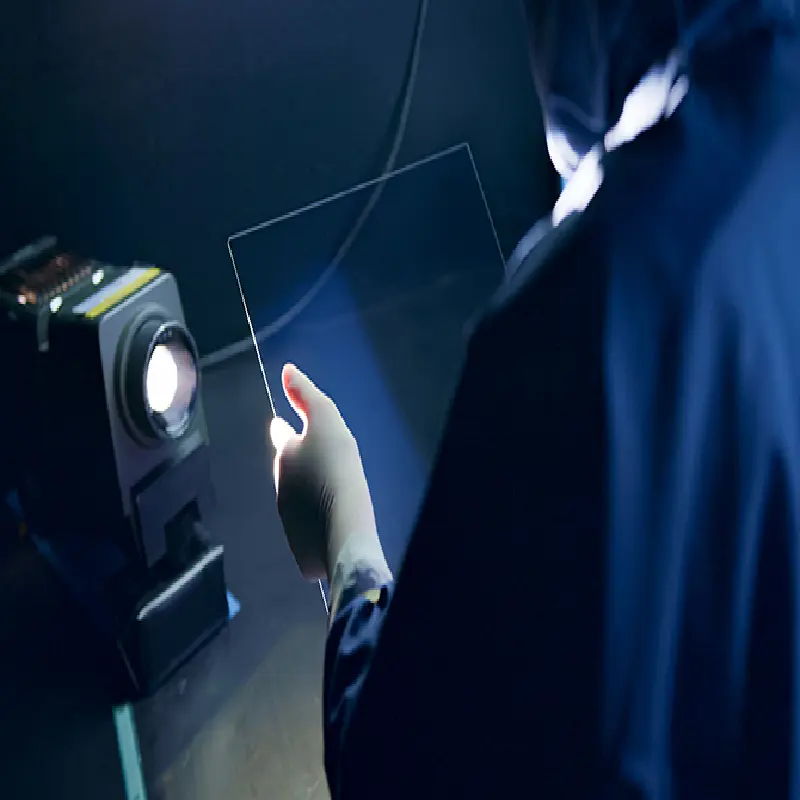
Development of ITO Thin Film
Research on ITO thin films began in the late 19th century when ultra-thin metal films were obtained on photoconductive materials. The research of transparent conductive materials entered a new phase during World War II, mainly applied to de-icing glass for aircraft windows. In 1950, In₂O₃, the second transparent semiconductor oxide, was first manufactured. Doping tin into In₂O₃ enabled widespread application of this material in transparent conductive films with broad market prospects.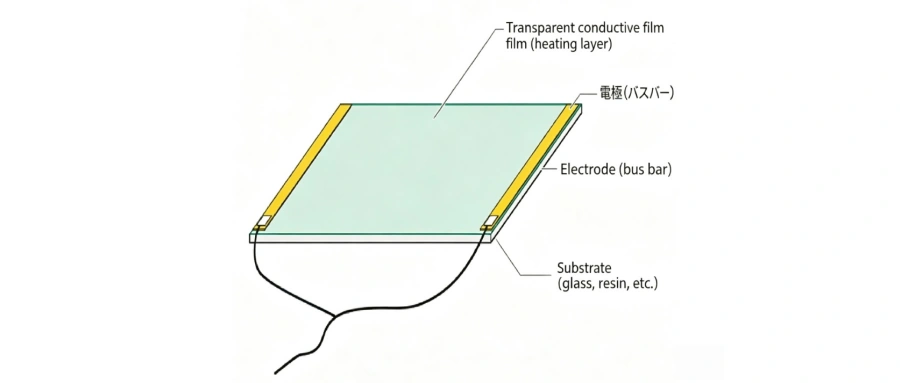
Basic Properties of ITO Thin Film
For ITO (In₂O₃:SnO₂ = 9:1), Sn atoms replace In atoms inside the In₂O₃ lattice and exist in the form of SnO₂. Trivalent In in In₂O₃ releases free electrons to the conduction band after Sn doping. Oxygen vacancies are generated under oxygen-deficient conditions, forming carrier concentration of 10²⁰~10²¹ cm⁻³ and mobility of 10~30 cm²/Vs. This mechanism delivers low resistivity at the level of 10⁻⁴ Ω·cm, giving ITO semiconductor conductive characteristics.
ITO is a wide-bandgap material with bandgap of 3.5~4.3 eV. It strongly absorbs ultraviolet light below 330nm and reflects near-infrared light due to plasma oscillation of carriers, while maintaining excellent transmittance within visible light range.
Sheet resistance(R), film thickness(d) and resistivity(ρ) follow the formula: R=ρ/d. Resistivity is the core indicator of ITO performance, determined by carrier concentration and mobility. Carrier concentration is controlled by tin and oxygen content; mobility depends on crystallization status, crystal structure and defect density of thin films, which can be adjusted via substrate temperature, sputtering voltage and deposition conditions.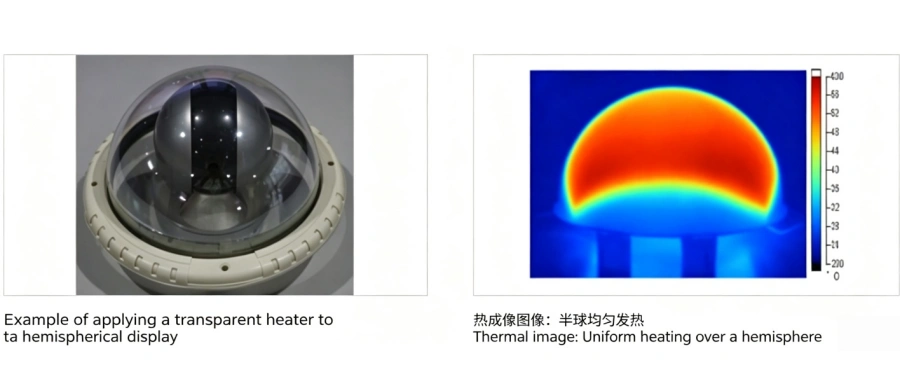
ITO Thin Film Heating Process & Fabrication Methods
- Low-Voltage Magnetron Sputtering: During magnetron sputtering, oxygen anions bombard the film surface and create crystal defects. Higher sputtering voltage leads to higher resistivity. Reducing sputtering voltage below -200V can cut resistivity by over 50%. Two effective ways: increase magnetic field strength (up to 1000G) or adopt RF+DC hybrid power supply to reduce sputtering voltage down to -110V.
- HDAP Deposition Method: HDAP uses high-density arc plasma to bombard ITO target, evaporate and deposit ITO onto substrates. Fully ionized In and Sn particles reduce crystal defects and lower resistivity. HDAP performs excellently for temperature-sensitive substrates which cannot withstand high base temperature, delivering smooth and uniform ITO thin films.

Main Applications of ITO Thin Film
ITO heating films are widely used in automotive transparent heating glass, train window defrosting, traffic indicator anti-fog panels, touch panels, display devices, solar cells and optical instruments. Flexible ITO films deposited on PET substrates are suitable for low-temperature fabrication for touch electronics such as PDAs and e-books.
Domestic Development of ITO Film Production Equipment
China started developing ITO vacuum coating equipment in the 1980s. Four generations of ITO production lines have been developed from single vacuum chamber units to multi-chamber continuous coating systems. Modern production lines adopt oil-free molecular pump vacuum systems, RF/MF/DC composite sputtering and multi-layer thin film deposition technology to manufacture high-performance ITO films for LCD, OLED and flexible touch products.
Technical Specifications
| Material | Indium Tin Oxide (In₂O₃:SnO₂ =9:1) |
| Band Gap | 3.5 ~ 4.3 eV |
| Resistivity | ~10⁻⁴ Ω·cm |
| Deposition Methods | DC Magnetron Sputtering, RF+DC Sputtering, HDAP |
| Substrate Option | Glass, PET flexible film |
| Typical Application | Defrost window, transparent heating panel, touch screen, display electrode |
WeChat
Scan the QR Code with WeChat